

Sarah had recently lost seven kilos because she thought she looked “fat”. She joined the gym and started to run. At first, she cut out junk food and carbs. Then, she started to skip breakfast because she was “running late”. She also restricted lunch and dinner to salads only. This was the beginning of her journey towards anorexia.
Results were quickly starting to appear (or disappear) and people began to comment on how “fit” Sarah looked. She felt more confident and in control of life. Maintaining her strict program was easy.
However, things changed. Instead of compliments, her family said she looked tired and thin. They said she was “not normal” and had an eating problem. They wanted her to “get some help”.
Despite these comments, Sarah believed she still “had a way to go”. She said, “As soon as I lose a few more kilos, I’ll be happy”. She was determined and spent much of the day planning, shopping and thinking about food.
Lately though, Sarah became a bit concerned. She often felt cold and hadn’t had her period for months. She thought she might have depression because she cried for no reason and couldn’t sleep properly. When Sarah finally visited the doctor she’d lost more weight, but she wasn’t any happier. They talked about the weight loss, but Sarah denied how serious it was.
How do I know whether I have Anorexia Nervosa?
Do you (or someone you know):
- Refuse to maintain body weight at or above minimally normal for age and height?
- Have an intense fear of gaining weight or becoming fat, even though underweight?
- Deny the seriousness of current body weight?
- Have a disturbance in the way you view your body shape or weight?
- Have no menstrual cycle for at least three months?
- Restrict food, or binge and purge using vomiting and/or laxatives? (1)(3).
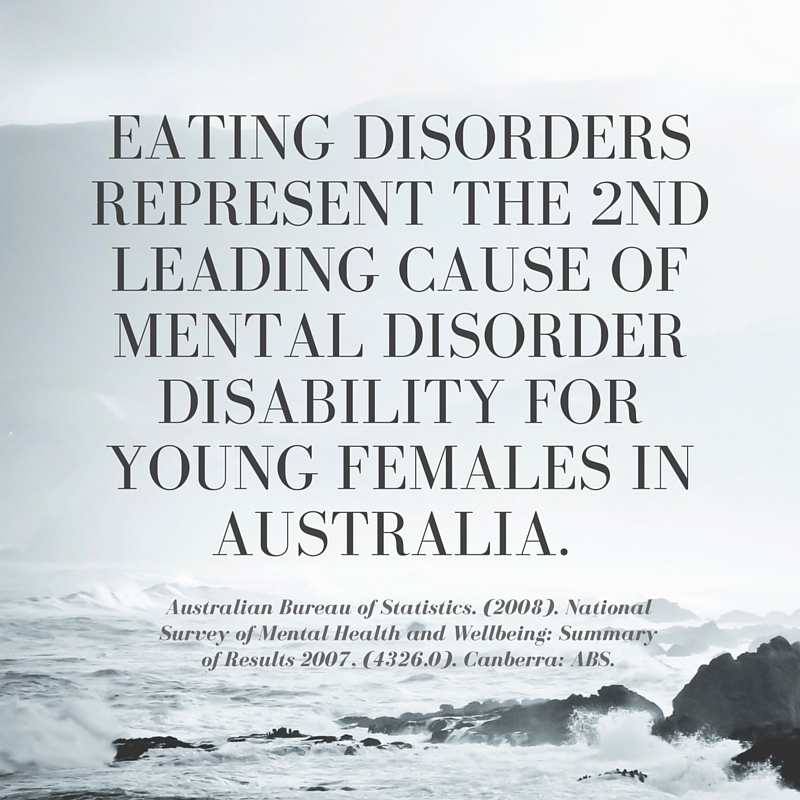
Eating disorders are one of the most serious psychiatric disorders. The mortality rate for people with Anorexia Nervosa is high (six to 12 times higher than the general population). Alarmingly, one in five people with Anorexia Nervosa die by suicide. Eating disorders represent the second leading cause of mental disorder disability for young females in Australia. (2).
Risk factors include: age, anxiety, perfectionistic traits, parenting styles, cultural pressures, and genetic heritability. People who diet at a severe level are 18 times more likely to develop an eating disorder within six months, increasing to one in five over 12 months (1). Early intervention leads to the best outcome. Sadly, people often deny the seriousness of the disorder and often wait too long before seeking help.
You can recover from this disorder – don’t wait – do something today. It’s more common than you think.
Jenny Brown
References:
1. American Psychiatric Association. (2013). Diagnostic and Statistical Manual of Mental Disorders (5th Ed.). Washington, D.C.: American Psychiatric Association.
2. Australian Bureau of Statistics. (2008). National Survey of Mental Health and Wellbeing: Summary of Results 2007, (4326.0). Canberra: ABS.
3. Attia, E. (2010). Anorexia Nervosa: Current Status and Future Directions. Annual Review of Medicine, 61, (1), 425–35.
